
What Happens When the Brand Gets Bigger Than Its Identity?
Every brand identity is written for a company of a certain size, with a certain product, speaking to a certain customer. That is a sensible place to begin. The trouble starts a few years on, when the business has moved ahead, and the identity is left handling things it was never briefed for. This piece covers how to recognize that moment, why it happens, and what to do about it.
Why does this happen?
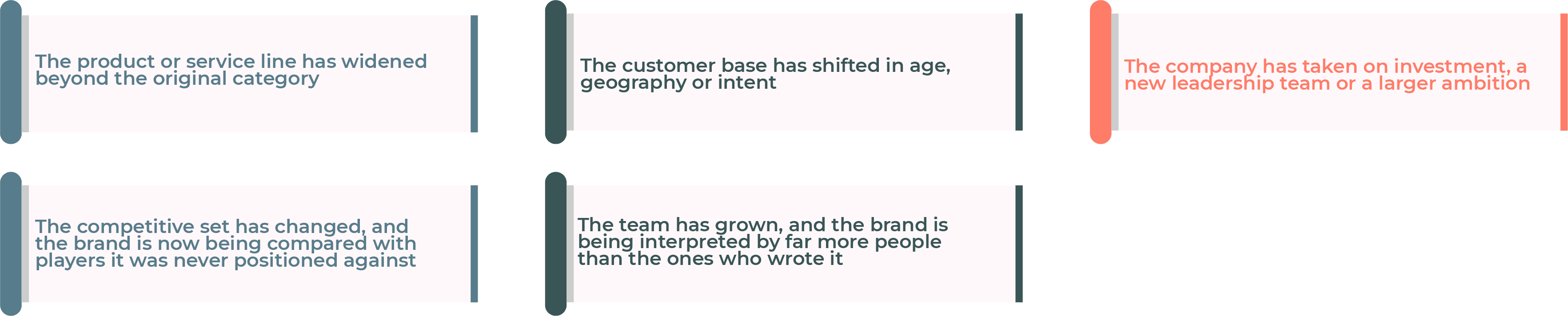
Outgrowing an identity is usually a by-product of healthy growth. A few common triggers:
- The product or service line has widened beyond the original category
- The customer base has shifted in age, geography or intent
- The company has taken on an investment, a new leadership team or a larger ambition
- The competitive set has changed, and the brand is now being compared with players it was never positioned against
- The team has grown, and the brand is being interpreted by far more people than the ones who wrote it
- When the brand taps into newer media channels, expanding the brand exposure to newer platforms
How to spot it
- The signs show up in language long before they show up in design.
- Descriptions of the company need an "also" or a "while" to be accurate
- The tagline grows a little with every new product that wants representation
- Leadership presentations open with the company's history so the present makes sense
- Sales, marketing and HR each describe the brand differently
- Creative briefs keep asking for work that the guidelines technically do not permit
- New hires take weeks to explain what the company stands for
Why a new logo rarely solves it
Most companies reach for the visual identity first, which is understandable. A logo is tangible. It can be commissioned, approved and announced within a quarter, and it gives everyone the feeling that something has been done. But a logo can only express a position that has already been decided, and in these situations it usually has not. The result is a handsome rebrand that looks like a new company and sounds exactly like the old one, because the thinking underneath never moved.
What the brands that stretch well have in common
They built on a belief rather than a product description. A belief travels well. It holds a view on how the company behaves and what it cares about, and it says very little about what is on the shelf this year. A category-led identity has to be rewritten whenever the portfolio shifts, whereas a belief-led one only needs to be applied with intelligence.
The right time to act
Earlier is better. While the identity still mostly works, there is room for editorial judgement. Once a competitor repositions or an investor asks an awkward question, the work turns defensive, and defensive work tends to chase whatever the market is rewarding at that moment while spending equity that took years to build.
What a considered identity review involves
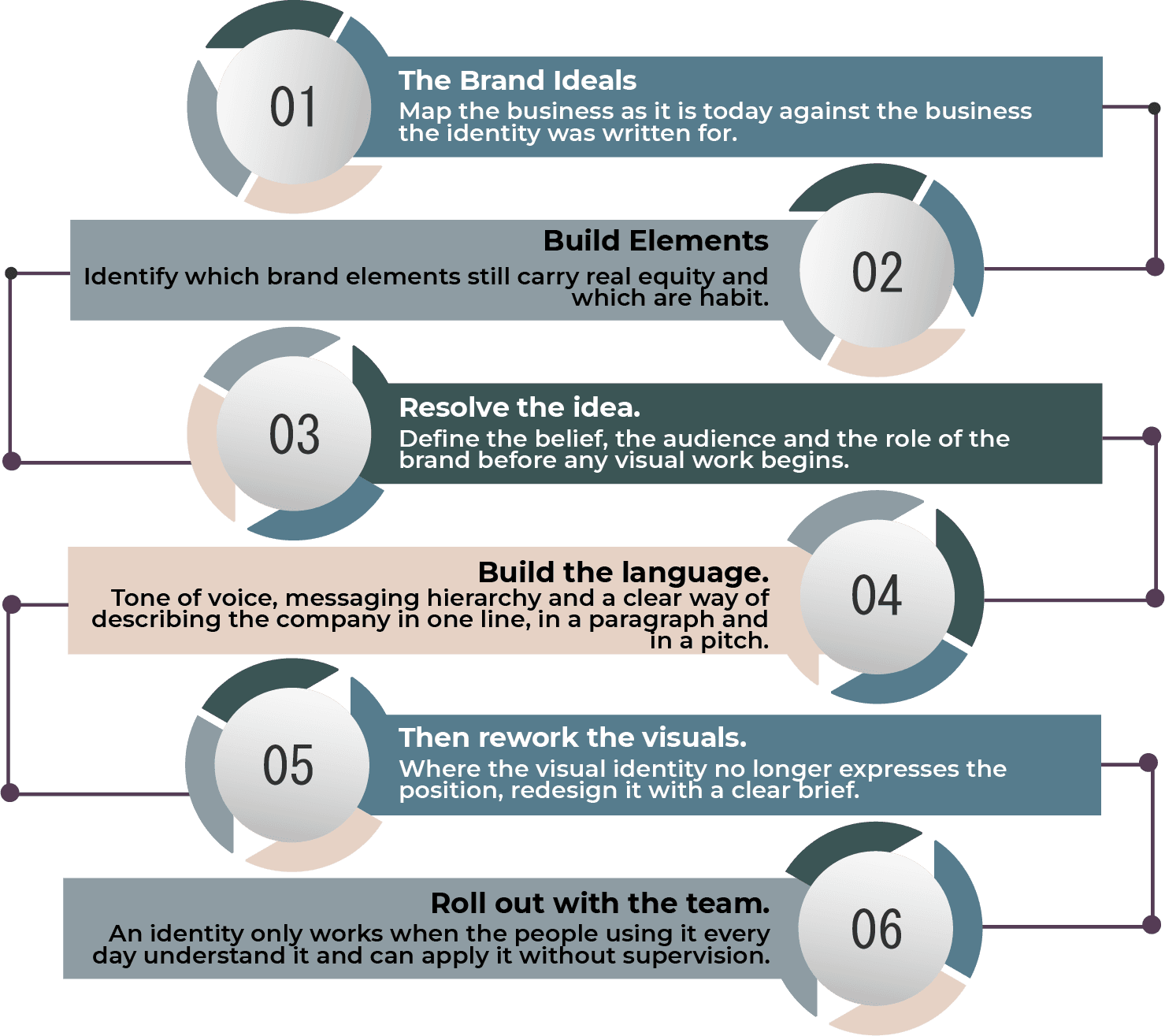
- Audit what has changed. Map the business as it is today against the business the identity was written for.
- Separate the true from the familiar. Identify which brand elements still carry real equity and which are habit.
- Resolve the idea. Define the belief, the audience and the role of the brand before any visual work begins.
- Build the language. Tone of voice, messaging hierarchy and a clear way of describing the company in one line, in a paragraph and in a pitch.
- Then rework the visuals. Where the visual identity no longer expresses the position, redesign it with a clear brief.
- Roll out with the team. An identity only works when the people using it every day understand it and can apply it without supervision.
Questions worth asking internally
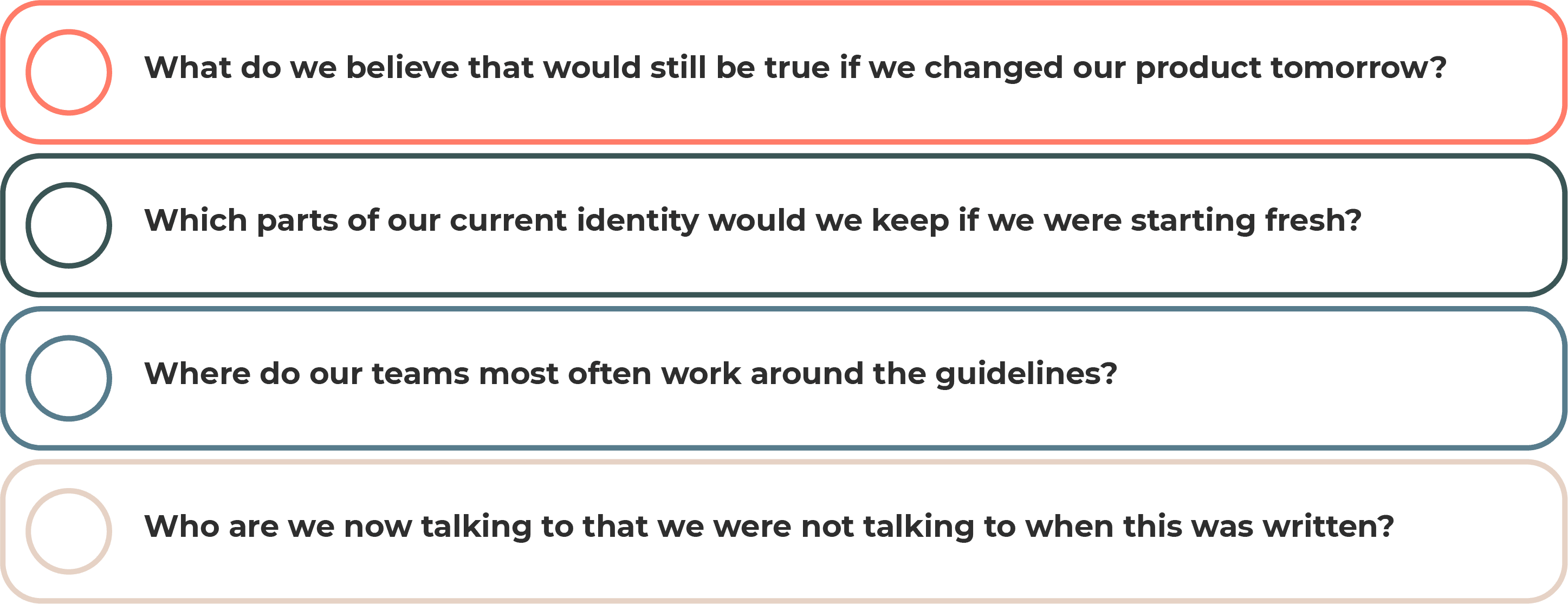
- What do we believe that would still be true if we changed our product tomorrow?
- Which parts of our current identity would we keep if we were starting fresh?
- Where do our teams most often work around the guidelines?
- Who are we now talking to that we were not talking to when this was written?
Conclusion
An identity works best when it is treated like a business plan, as a document with a review date. Companies change, and the description of the company should be allowed to change with them. Outgrowing an identity is what progress looks like from the inside. The only real mistake is carrying on as though nothing has moved.